SolutionsExterior surfaces
Surfaces thatclean themselves
One mineral, solvent-free coating for the outside of a building: facades, concrete, paving, wood, statues and heritage stone. It is vapour-permeable, and daylight is what activates it.
Conventional protection resists. This layer reacts.
What the weatherdoes to a surface
Soiling and growth
Surfaces darken, and algae, lichens, moss and mould take hold wherever they stay damp.
Degradation
Ultraviolet light breaks down the binder, and water, oxygen, CO₂, de-icing salts and temperature cycling erode concrete.
Passive treatment
Silicone paints and impregnations resist for a while, then need cleaning and chemical treatment again.
A passive coating does not end the cycle. It sets its interval.
How it workson a facade
The coating is a mineral layer 10–30 µm thick, left open to the light. It decomposes the organic contamination that lands on it, denies microorganisms a foothold, and shields the substrate's own binder from ultraviolet light.
It is vapour-permeable, so the wall behind it still breathes, and it releases graffiti without damaging what is underneath.
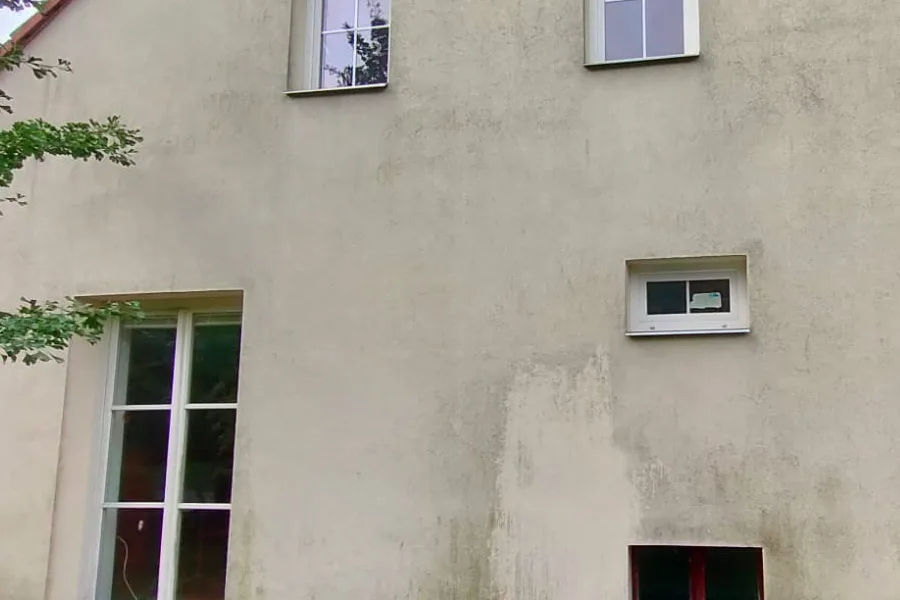
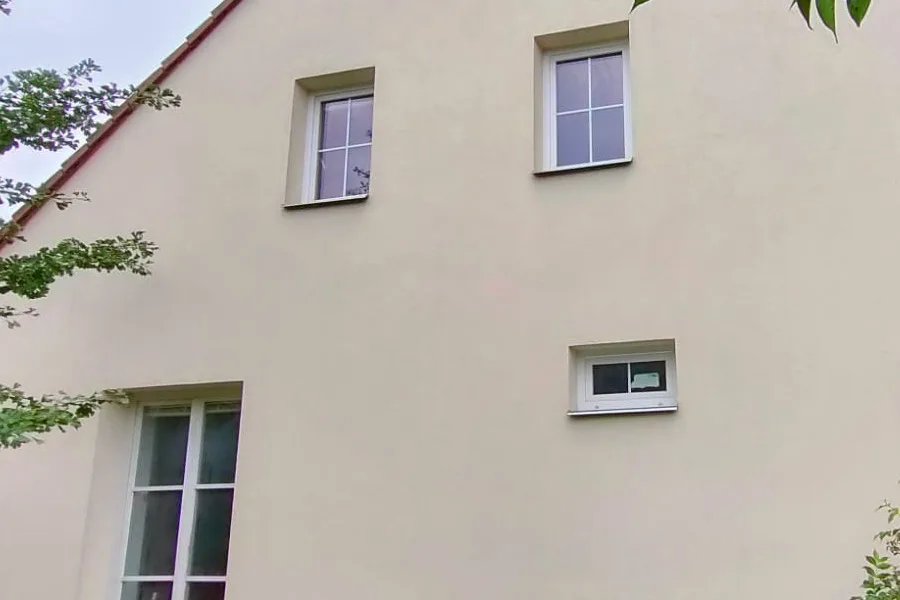
Nothing is added after the coat but light.
Where itis used
Commercial buildings
Facades of offices, retail and representative buildings, and the heritage-listed stone that cannot be stripped and repainted.
Residential
Houses and terraces, fences, and the wooden structures around them.
Historical buildings
Concrete structures, paving, statues and monuments — the public surfaces that are hardest to take out of service.
Different buildings, one exposure problem: weather, light, and whatever grows in between.
What itchanges
Self-cleaning
Daylight decomposes the organic contamination that lands on the surface, so it stays clean without being washed.
UV protection
The layer takes the ultraviolet light that would otherwise break down the substrate's own binder.
Anti-graffiti
Graffiti comes off in 10 minutes with a brush and pressure water. The durable anti-graffiti build needs 6+ coats and white surfaces only.
It cleans the air, too
FN NANO® calculates that 1 m² of treated surface purifies around 3 million m³ of air a year, at an average airflow of 2 m/s and 8 hours of daylight.
What itadds up to
Facades still clean after 7 years and more, and wood with no algae after 12 years.
These are FN NANO®'s own worked examples — a dock still clear after 5 years, a building in Šumburk after 6 — and it warrants 10 years of full functionality on a coated facade. What third parties measured, including NOx degradation at the Czech Academy of Sciences and Universita di Torino, is in the document library.
Which productfor which substrate
FN NANO®1
7–10 m² per liter
Coloured facades and concrete — the standard exterior coating.
FN NANO®2
7–10 m² per liter
White facades. The same coating is the one that purifies air indoors.
FN NANO®Transparent
6–15 m² per liter
Porous natural and artificial stone, at 80% transparency.
FN NANO®Wood
8–20 m² per liter
Timber, against algae and darkening.
FN NANO®Uni
6–15 m² per liter
Stone, wood, tiles and terraces — the universal exterior variant.
Five variants, one mechanism. What differs is what they are formulated to sit on.
The same layer,indoors and in water
Coated inside a room, it does the same two things it does on a facade: it keeps itself clean and it cleans the air. Dosed into a pool or a pond, the same chemistry treats the water instead of a surface.
Specifying acoated surface
Tell us the substrate, its exposure and the area, and we will come back with the variant and the specification. If you sell into construction and want to carry the product, the partner track is a separate conversation.